

The hours and days after your pet’s spay or neuter surgery can feel overwhelming, especially when you see them groggy and uncomfortable. Understanding what to expect during recovery helps you provide the best care possible and recognize when something needs attention. Those first few days at home are critical for proper healing, and knowing the normal recovery timeline can ease your worries while ensuring your companion gets back to their playful self safely.
At Mountain View Animal Hospital & Holistic Pet Care, we understand that surgical procedures like spaying and neutering are significant events for both you and your pet. Our AAHA-accredited hospital combines traditional veterinary medicine with Holistic approaches to support your pet through every stage of recovery. We use Fear-Free techniques that prioritize your pet’s emotional well-being alongside their physical healing, ensuring they feel safe and comfortable throughout the process.
 The First 24 Hours After Surgery
 The First 24 Hours After Surgery
Your pet will likely seem sleepy and disoriented when you bring them home, which is completely normal as the anesthesia wears off. They may stumble slightly, seem confused about their surroundings, or want to sleep more than usual. Create a quiet, comfortable space away from stairs and other pets where they can rest undisturbed. Keep the room temperature comfortable and ensure fresh water is easily accessible, though don’t be alarmed if they show little interest in drinking initially.
Many pets experience reduced appetite for the first day or two following surgery. Offer small amounts of their regular food, but don’t force them to eat if they’re not interested. According to the Animal Humane Society, most pets return to normal eating patterns within 24 to 48 hours after the procedure. If your pet refuses food for more than two days, contact our team for guidance.
Managing Pain and Discomfort
We provide pain medication to keep your pet comfortable during recovery, and it’s essential to administer it exactly as directed. Never skip doses or stop medication early, even if your pet seems to be feeling better. Some pets hide their discomfort well, so watch for subtle signs like reluctance to move, changes in breathing patterns, or unusual vocalizations.
Monitoring the Incision Site
Check your pet’s incision site twice daily for any signs of problems. The area should look clean with minimal redness directly along the incision line. A small amount of clear or slightly pink discharge immediately after surgery is normal, but any thick, yellow, or green discharge indicates infection. Excessive swelling, gaps in the incision, or foul odors require immediate veterinary attention. If you notice any concerning changes, our team is available to address post-surgical complications quickly.
Activity Restrictions and the E-Collar
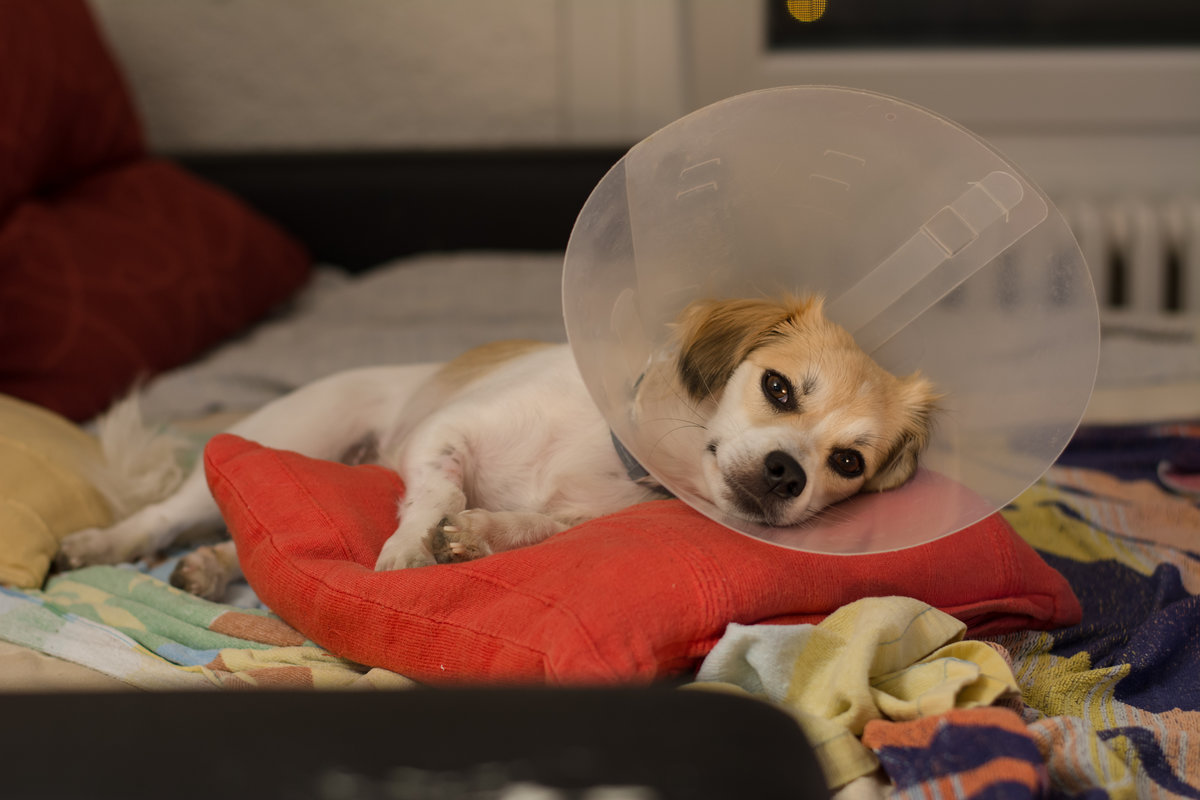
One of the biggest challenges during recovery is keeping your pet calm and preventing them from licking or chewing their incision. The protective collar we provide may seem uncomfortable, but it’s essential for preventing serious complications. Pets naturally want to clean their wounds, but their saliva can introduce bacteria and cause infections. The collar should stay on at all times, including during sleep, for the full recovery period of 10 to 14 days.
Restrict your pet’s activity during this time, which means no running, jumping, or playing with other animals. Keep dogs on leash for bathroom breaks only, and confine cats to a single room if possible. Excessive movement can cause internal bleeding, hernias, or wound dehiscence where the incision opens up. We know this can be frustrating for energetic pets, but these precautions prevent far more serious problems.
What’s Normal and What’s Not After Your Pet’s Spay or Neuter
Some lethargy, mild swelling around the incision, and decreased appetite for the first day or two fall within normal recovery parameters. Male pets typically bounce back more quickly than females since their procedures are less invasive. Female pets, especially those who were spayed, have undergone more extensive abdominal surgery and may need additional recovery time.
Watch for warning signs that indicate complications. Excessive bleeding, vomiting more than once, extreme lethargy lasting beyond the first day, or refusal to drink water all warrant immediate attention. If your pet seems to be in severe pain despite medication, develops a fever, or shows signs of distress, don’t wait to contact us. Our wellness and preventative care philosophy emphasizes proactive monitoring, and we would rather see your pet for a precautionary check than have a small issue become a major problem.
Contact Mountain View Animal Hospital & Holistic Pet Care for Compassionate Surgical Care
Recovery from spay or neuter surgery requires patience and attentiveness, and most pets heal beautifully with proper care and monitoring. Our team is here to support you through every step of the process, from pre-surgical preparation to post-operative care and beyond. We combine traditional veterinary expertise with Holistic approaches to ensure your pet receives comprehensive care that addresses their physical and emotional needs.
If you have any concerns about your pet’s recovery or would like to discuss our surgical services, we’re ready to help. Contact us today to learn more about how we can support your pet’s health and well-being at every stage of life.





Leave A Comment