
Something changes in the way your dog moves, and you cannot quite put your finger on it. They hesitate before jumping onto the couch, slow down on walks, or seem stiffer after resting. These subtle shifts may not look like a dramatic health concern, but they are often your dog’s way of signaling that their muscles, fascia, and the tissues surrounding their spine and joints are not functioning the way they should.
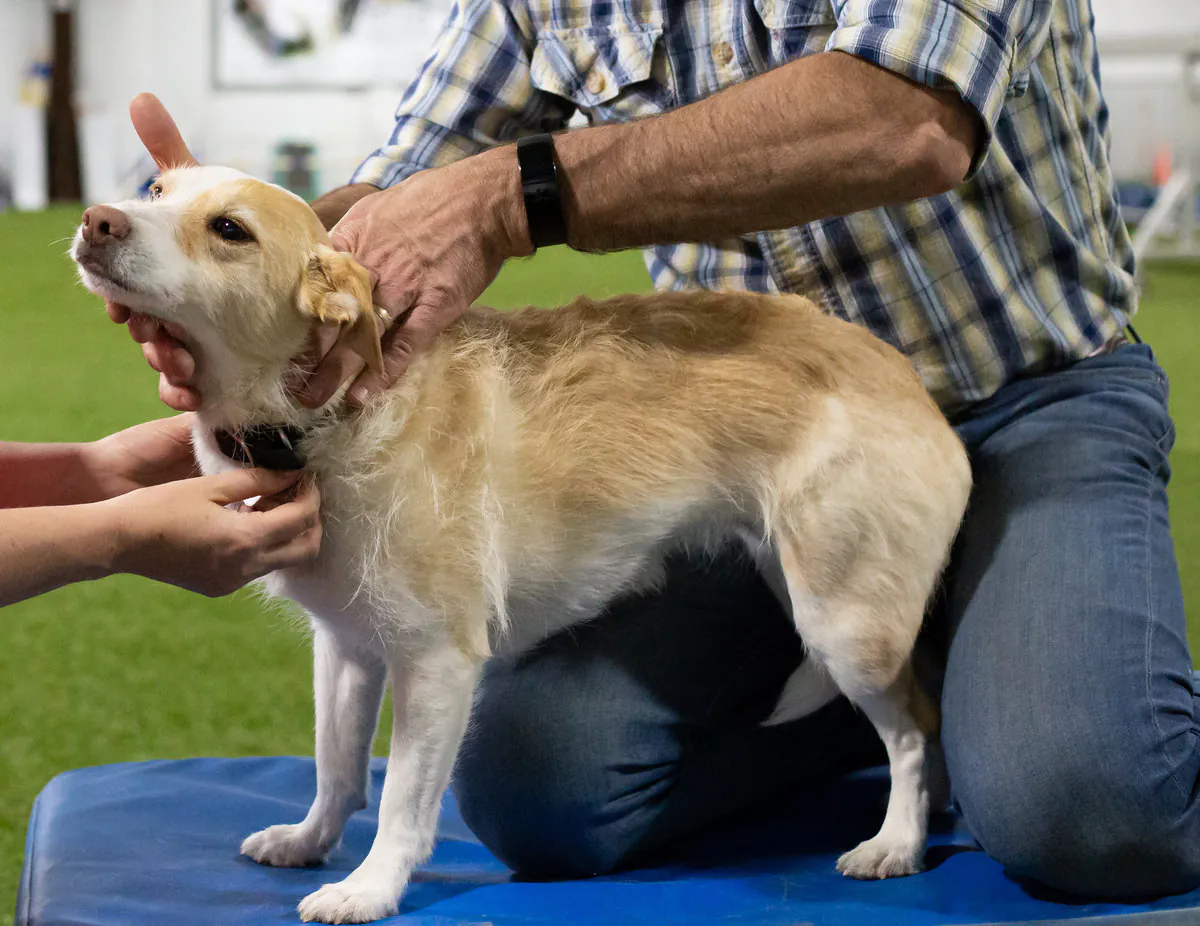
At Mountain View Animal Hospital & Holistic Pet Care in Reno, Nevada, we take those signals seriously. Our orthopedic manipulation services use gentle, targeted techniques, including Veterinary Orthopedic Manipulation (VOM) and Animal Neuromyofascial Release (ANMR), to support your dog’s musculoskeletal health from the inside out. These approaches focus on releasing tension in the muscles and fascia to encourage the spine to naturally return to proper alignment, rather than forcefully adjusting joints. It is a passive, gentle process that many dogs find deeply relaxing.
What Veterinary Spinal Manipulation Actually Involves
Before exploring whether your dog may benefit, it helps to understand what this type of care actually looks like in practice. Unlike the image of a human chiropractic visit, veterinary orthopedic manipulation does not involve joint cracking or forceful adjustments. The goal is to work with the soft tissues, muscles, and fascia that surround the spine and joints, releasing tension and allowing the body to restore balance on its own.
A peer-reviewed systematic review published through the National Institutes of Health found that mobilization and manipulation techniques used in veterinary medicine consistently demonstrated positive effects for treating pain, stiffness, and muscle hypertonicity in animals. As our understanding of these techniques continues to grow, so does the role they may play in integrative veterinary care.
Sign 1: Changes in Gait or Movement
One of the earliest and most telling signs that a dog may benefit from orthopedic and soft tissue work is a change in how they move. You may notice them favoring one side, taking shorter steps, or moving in a way that looks slightly “off” compared to their usual stride. These shifts often trace back to tightness or restriction in the muscles and connective tissue along the spine or hindquarters.
Dogs that have recently recovered from surgery, an injury, or any period of reduced activity are particularly likely to develop compensatory movement patterns. When one area of the body is guarded or restricted, surrounding muscles tend to overwork to compensate, which can create a ripple of tension throughout the body. Gentle manipulation and neuromyofascial release may help restore more natural, comfortable movement.
Sign 2: Stiffness After Rest
Does your dog seem stiffer when they first get up in the morning or after a long nap? Stiffness following rest is a common sign that the muscles and fascia surrounding the spine or joints are not releasing tension effectively. This is especially common in active dogs, senior dogs, and those with a history of joint or disc concerns.
This type of stiffness is not always about the joint itself. Often, the muscles and connective tissue layered around the spine are what need attention. VOM and ANMR work specifically on those tissues, encouraging them to relax and release so that normal movement becomes easier and more comfortable over time. Pairing this with wellness and preventive care allows your veterinarian to monitor changes and adjust your dog’s care plan as needed.
Sign 3: Reluctance to Perform Usual Activities
A dog who suddenly stops wanting to climb stairs, jump into the car, or play in the yard may not simply be having a lazy day. Reluctance to engage in activities they previously enjoyed is a meaningful behavioral signal, and it often points to discomfort somewhere along the spine, in the hips, or in the surrounding soft tissues.
Because dogs cannot tell us where something hurts, behavioral changes are often the clearest window into how they are feeling. If your dog seems hesitant, withdrawn from activity, or reacts when touched along their back or hindquarters, it may be worth discussing orthopedic manipulation as part of their care plan. Our holistic services also include options like acupuncture that can complement orthopedic and soft tissue work for a truly whole-body approach.
Talk to Our Team at Mountain View Animal Hospital & Holistic Pet Care
Recognizing these signs early gives your dog the best opportunity for comfortable, supported recovery or ongoing maintenance. Our team at Mountain View Animal Hospital & Holistic Pet Care has deep experience in integrative approaches to canine care, and we are proud to be one of the fewer than 15% of animal hospitals with AAHA accreditation. You can learn more about our story and philosophy to understand what sets our approach apart.
If any of these signs feel familiar, we would love to talk with you about your dog’s specific situation. Please reach out through our contact form to schedule an appointment and take the next step toward supporting your dog’s comfort and mobility.


Leave A Comment