
If your Bulldog snores loudly, struggles to catch their breath after a short walk, or breathes noisily even at rest, these signs are not just quirks of the breed. Brachycephalic Obstructive Airway Syndrome, or BOAS, is a real and manageable condition that affects flat-faced dogs, and knowing what to look for can make a meaningful difference in your pet’s quality of life. At Mountain View Animal Hospital & Holistic Pet Care in Reno, Nevada, our team is here to help you understand what BOAS means for your dog and how thoughtful veterinary care can support their comfort and long-term health.
Routine wellness and preventative care are one of the most important steps you can take for a brachycephalic dog, and it starts with knowing what to watch for.
What Is BOAS, and Why Does It Affect Bulldogs?
Bulldogs, French Bulldogs, Pugs, and other brachycephalic breeds are born with skull shapes that compress their airways. This unique anatomy gives these dogs their endearing, flat-faced look, but it also means their soft tissues, including the soft palate, nostrils, and trachea, may not have the same space to function as they do in dogs with longer snouts. As a result, breathing requires significantly more effort, and over time, that extra strain can lead to a range of symptoms that affect daily life.
Research published in BMC Veterinary Research found that moderate-to-severe BOAS signs were present in 28% to 30% of dogs across the three most commonly affected breeds, underscoring the condition’s widespread prevalence. This is one reason routine veterinary visits play such an important role for these dogs. Regular check-ins allow us to assess airway health before problems become serious.
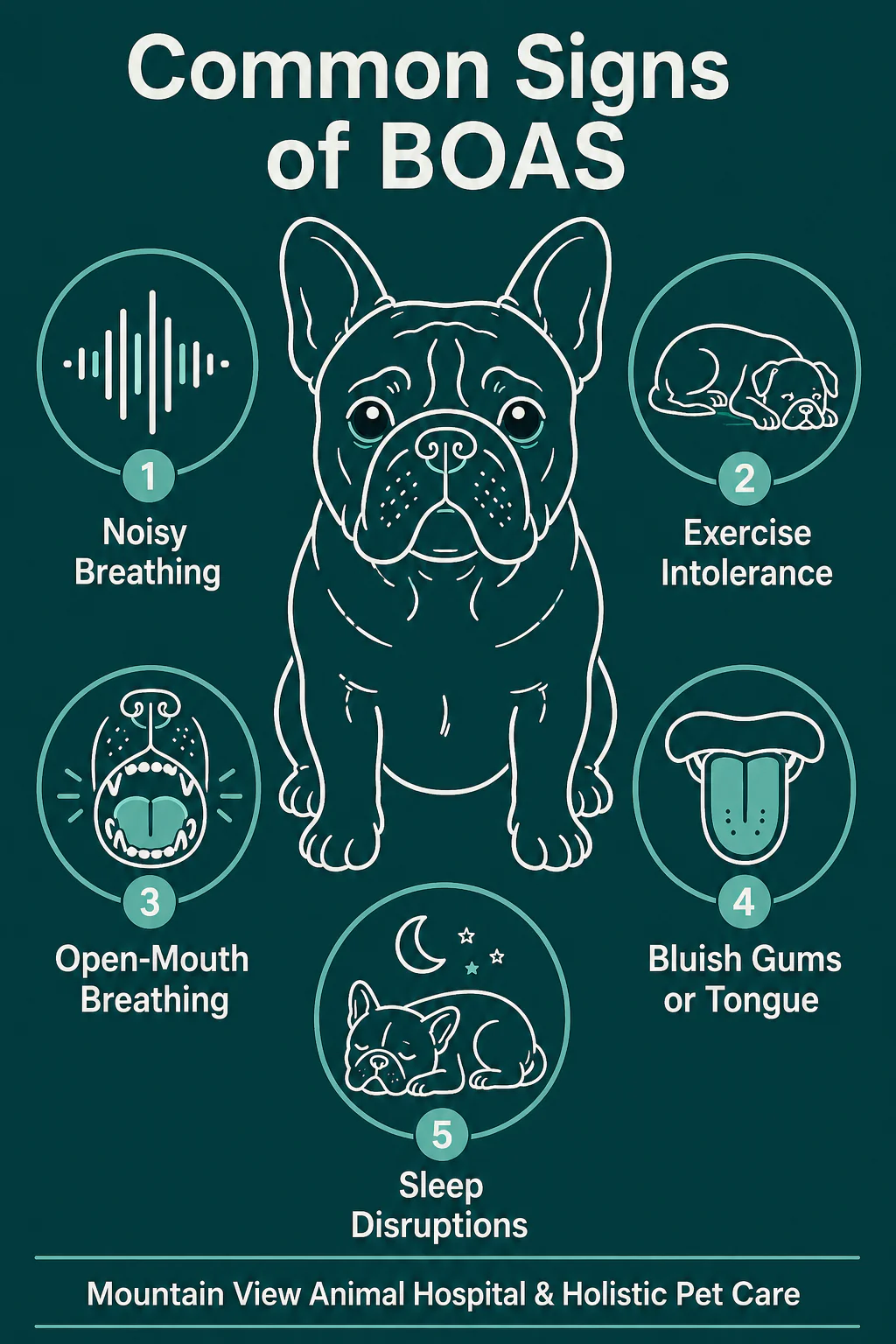
Common Signs of BOAS
There are several signs you may notice in a dog living with BOAS. Recognizing these early gives you the best chance to seek care promptly:
- Noisy breathing: Snoring, snorting, or raspy sounds during breathing, even when your dog is calm or sleeping
- Exercise intolerance: Tiring quickly during walks, play, or physical activity
- Open-mouth breathing: Breathing through the mouth more often than through the nose
- Cyanosis: A bluish tint to the gums or tongue, which signals reduced oxygen and warrants urgent attention
- Sleep disruptions: Restlessness at night or difficulty settling into sleep
These signs range from mild to severe, and not every dog will display all of them. However, even mild signs are worth discussing with a veterinarian, because BOAS tends to progress if left unaddressed.
How BOAS Is Diagnosed and Managed
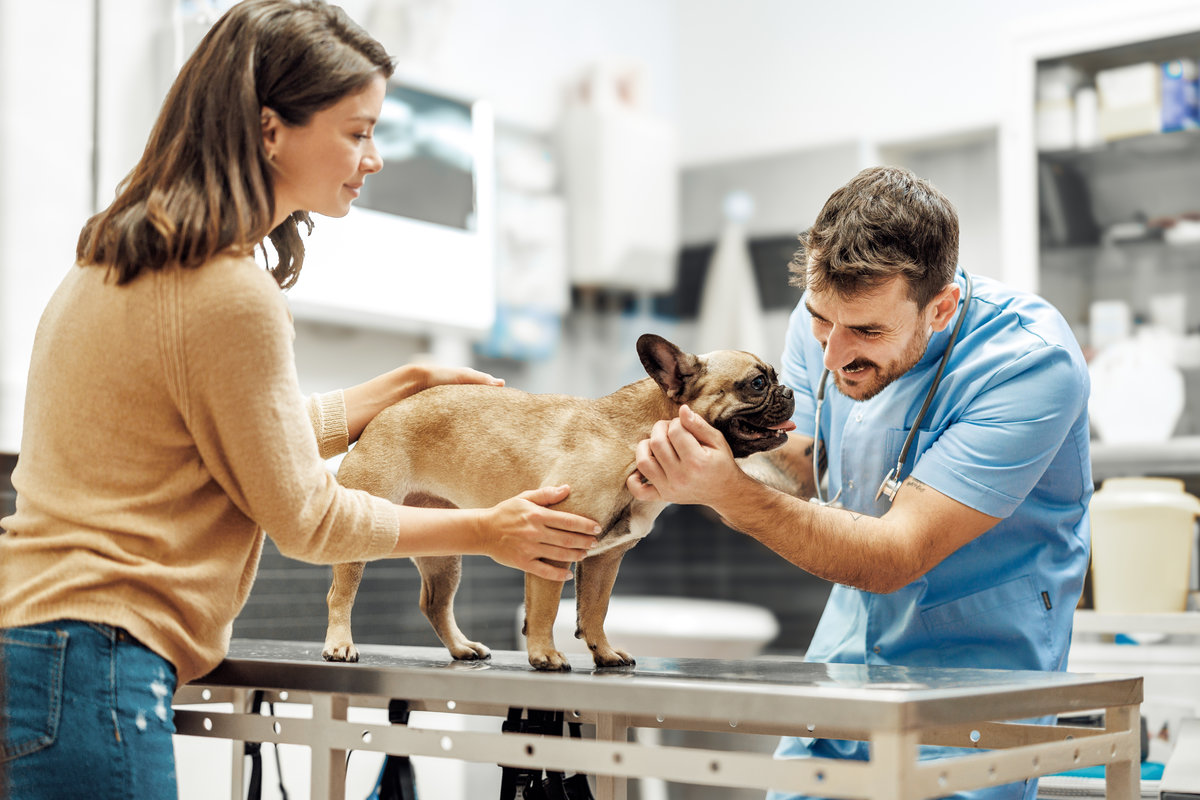
A thorough physical examination is the starting point for diagnosing BOAS. During a visit, we assess your dog’s nostrils, evaluate their breathing patterns, and may recommend imaging to get a clearer picture of the airway. In some cases, additional diagnostics are performed while your dog is lightly sedated to allow a more detailed look at the soft palate and larynx.
Treatment Options
Management of BOAS depends on the severity of your dog’s condition. Some dogs benefit from lifestyle adjustments, while others may require surgical correction to improve their airway.
Weight management is one of the most effective tools available. Even a modest reduction in body weight can reduce the strain on an already compromised airway. Avoiding intense exercise during hot or humid weather is equally important, as heat significantly increases the risk of breathing distress in brachycephalic breeds.
For dogs with more pronounced anatomy, surgical procedures may be recommended to widen the nostrils, shorten an elongated soft palate, or address other obstructions. These procedures, when performed at the right time, can dramatically improve comfort and breathing capacity. Our veterinary services include the diagnostic and procedural support your dog may need.
Living Well With a Brachycephalic Dog
Owning a flat-faced breed comes with a wonderful kind of loyalty and personality, and with the right support, these dogs can live happy, comfortable lives. Rather than waiting for signs of clear respiratory trouble, the best approach is to proactively manage your pet’s health to prevent complications before they arise. Dogs are remarkably good at adapting to discomfort, which means by the time symptoms become obvious, the condition may have progressed further than owners realize.
Keeping your dog at a healthy weight, avoiding overexertion, using a harness instead of a collar to reduce neck pressure, and scheduling regular veterinary check-ins are all practical steps you can take at home. Knowing the signs of a breathing emergency, including heavy, labored breathing, blue-tinged gums, or an inability to settle, is also important for every brachycephalic dog owner to recognize.
Our team at Mountain View Animal Hospital takes time to walk you through what is normal for your individual dog and what changes to watch for between visits. We take a family-oriented, compassionate approach to care, which means your dog’s comfort and your peace of mind both matter to us.
Mountain View Animal Hospital & Holistic Pet Care Is Here for Your Bulldog
BOAS is a condition worth taking seriously, and the good news is that with attentive care, many dogs with this syndrome go on to live full, comfortable lives. At Mountain View Animal Hospital & Holistic Pet Care, we are proud to be one of the few animal hospitals nationwide to hold AAHA accreditation. This standard reflects our commitment to the highest level of care across nearly 900 operational and clinical benchmarks. You can learn more about what sets us apart on our accreditation and awards page.
Whether your dog has already been diagnosed with BOAS or you simply want to have their breathing evaluated as a precaution, our team is ready to help. Reach out through our contact form to schedule an appointment and get your flat-faced companion the attentive, knowledgeable care they deserve.




Leave A Comment