
Yes, guinea pigs can absolutely develop serious dental problems, and, in fact, dental disease is one of the most common health concerns in this species. Their teeth never stop growing, which means any imbalance in wear, diet, or jaw alignment can quickly snowball into a painful, life-altering condition. If you have a guinea pig at home and you are wondering whether their teeth deserve the same attention as a dog or cat’s, the answer is a firm yes.
At Mountain View Animal Hospital & Holistic Pet Care in Reno, Nevada, our team cares for a wide range of animals beyond the typical cat and dog, and guinea pigs hold a special place in our exotic animal care services. We understand the unique physiology these small pets carry, and we are here to help you stay ahead of problems before they affect your guinea pig’s quality of life.
Why Guinea Pig Teeth Are Different
Guinea pigs are what veterinarians call “hypsodont” animals, meaning all of their teeth, both the front incisors and the back cheek teeth, grow continuously throughout their lives. Unlike dogs or cats, whose adult teeth are permanent once they come in, a guinea pig’s teeth depend entirely on consistent wear to stay at a healthy length and angle. When they do not wear down properly, the consequences move fast.
The Cheek Teeth Are the Hidden Problem
Most guinea pig owners are familiar with the incisors, the front teeth you can easily see when your pet nibbles food. What is harder to spot are the premolars and molars sitting in the back of the mouth. These cheek teeth are where dental disease most often starts, and they are nearly impossible to evaluate without a veterinary exam. When they overgrow, they can form sharp spurs that cut into the tongue and cheeks, making eating painful or even impossible. A retrospective study of guinea pigs under primary veterinary care found that dental disease was among the most frequently reported conditions at specialist exotic animal clinics, accounting for over a third of all presentations in some practices.
Signs Your Guinea Pig May Have Dental Issues
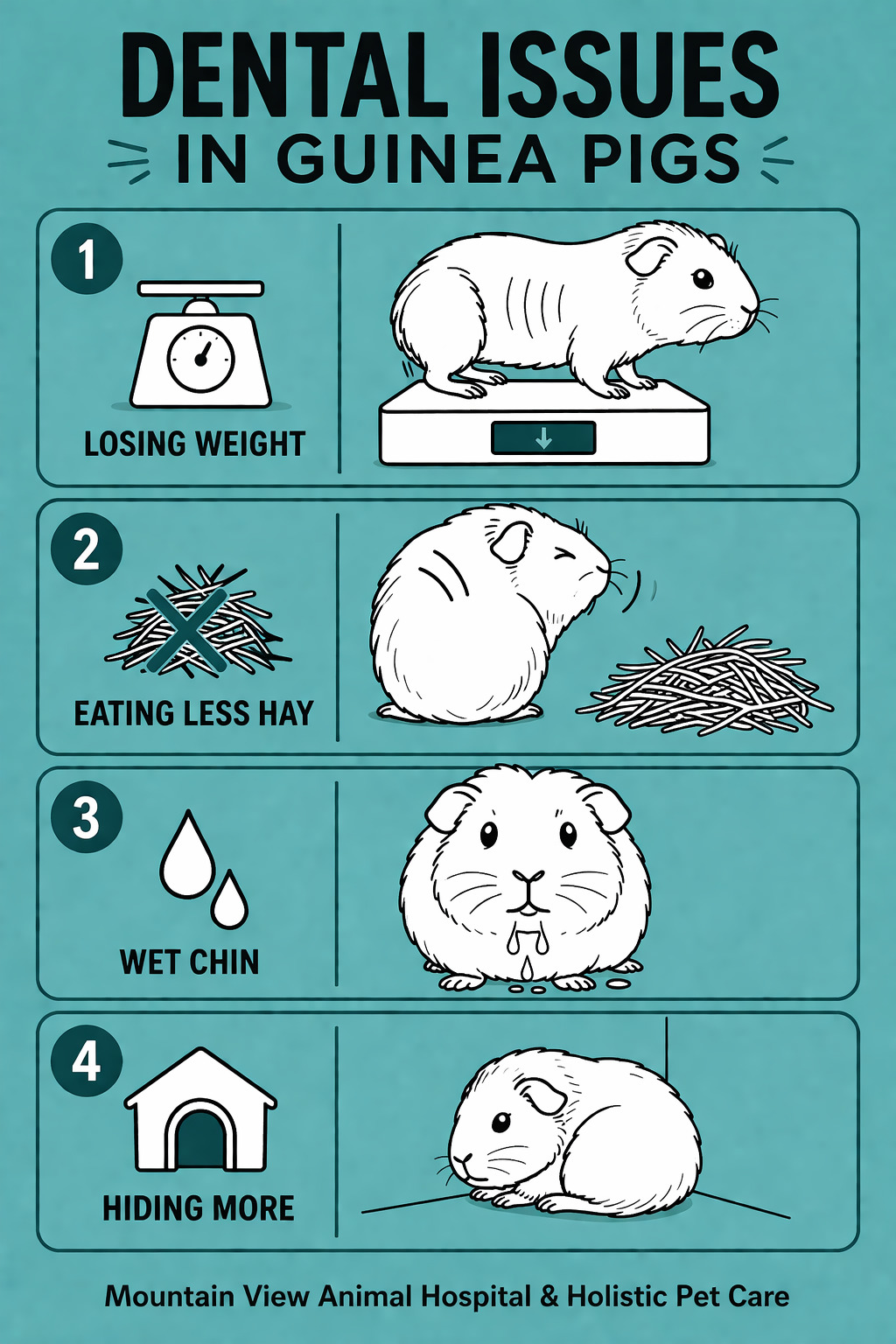
Recognizing a problem early gives your guinea pig the best chance at a smooth recovery. Here are some of the most common signs to watch for:
- Weight loss: A guinea pig not eating well due to mouth pain will lose weight noticeably.
- Selective eating: Dropping food, refusing hay, or only accepting soft foods can signal tooth discomfort.
- Drooling or a wet chin: Excessive moisture around the mouth often indicates difficulty chewing or swallowing.
- Behavioral changes: Hiding more than usual, reduced activity, or seeming irritable can all be signs of chronic pain.
Noticing one or more of these signs is reason enough to schedule a veterinary visit, as guinea pigs are prey animals by nature and tend to mask discomfort until it becomes severe.
What Causes Guinea Pig Dental Disease
The primary driver of dental problems in guinea pigs is an insufficient diet. Hay, specifically unlimited timothy hay or orchard grass, should make up the bulk of what a guinea pig eats. The long, coarse fibers require significant chewing and provide the grinding action that keeps all teeth worn to a proper length. Guinea pigs fed mostly pellets or soft vegetables do not chew nearly enough, setting the stage for overgrowth over time. Genetics and jaw structure also play a role, as some guinea pigs are simply more prone to misalignment regardless of diet. Our specialty pet care team can walk you through the nutritional habits that make the biggest difference in your guinea pig’s long-term dental health.
Diagnosis and What Treatment Looks Like
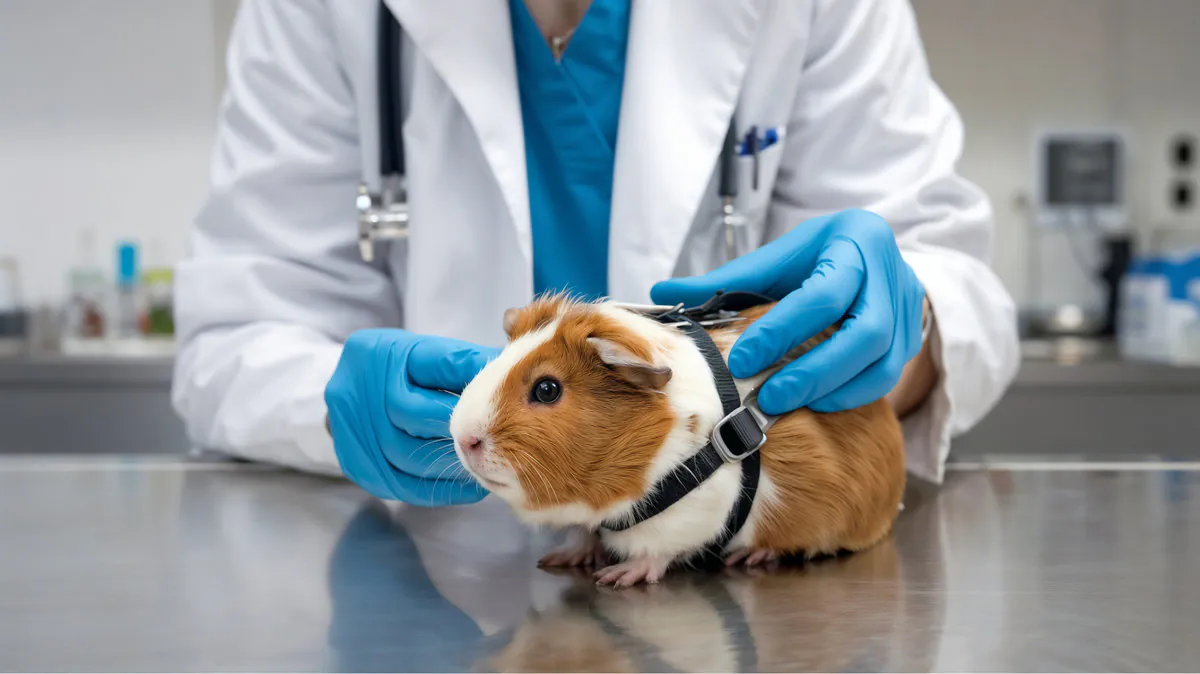
Dental disease in guinea pigs almost always requires a hands-on veterinary exam to assess properly, and in many cases, sedation is necessary to visualize the cheek teeth fully. A thorough oral exam allows the veterinarian to check for spurs, malocclusion, tooth root elongation, and other issues that would never be visible from the outside. Early-stage problems may be managed through dietary adjustments and routine dental trimming, while more advanced cases may require additional treatment. Our wellness and preventative care visits are a great opportunity to discuss your guinea pig’s oral health alongside their overall checkup, so nothing slips through the cracks. When more advanced oral treatment is needed, our in-house doctors provide more in-depth dental services to give your pet the thorough care they deserve.
Guinea Pig Dental Care at Mountain View Animal Hospital & Holistic Pet Care
Guinea pigs may be small, but their dental health is a serious matter that deserves real veterinary attention. At Mountain View Animal Hospital & Holistic Pet Care, we are proud to be one of the fewest than 15% of animal hospitals in the country to hold AAHA accreditation, a distinction earned through rigorous evaluation against nearly 900 standards of care. Newsweek has also recognized us as one of America’s Best Animal Hospitals, and our commitment to treating every patient with the same level of care, whether they are a golden retriever or a guinea pig, is what sets us apart.
If you have noticed any changes in how your guinea pig is eating, or if it has simply been a while since their last checkup, we encourage you to reach out to our team. Our holistic services and integrative care approach mean we look at your pet as a whole, not just the symptom in front of us. Schedule an appointment through our contact form and let us take a closer look at those teeth.
YOUR PET DESERVES THE BEST CARE
We're Here When You Need Us
At Mountain View Animal Hospital & Holistic Pet Care, our AAHA-accredited team is ready to support your pet's health with advanced diagnostics and integrative, holistic therapies — tailored to their unique needs.
Schedule an Appointment TodayWhat Our Clients Are Saying
Real reviews from real pet owners in the Reno community


Leave A Comment